
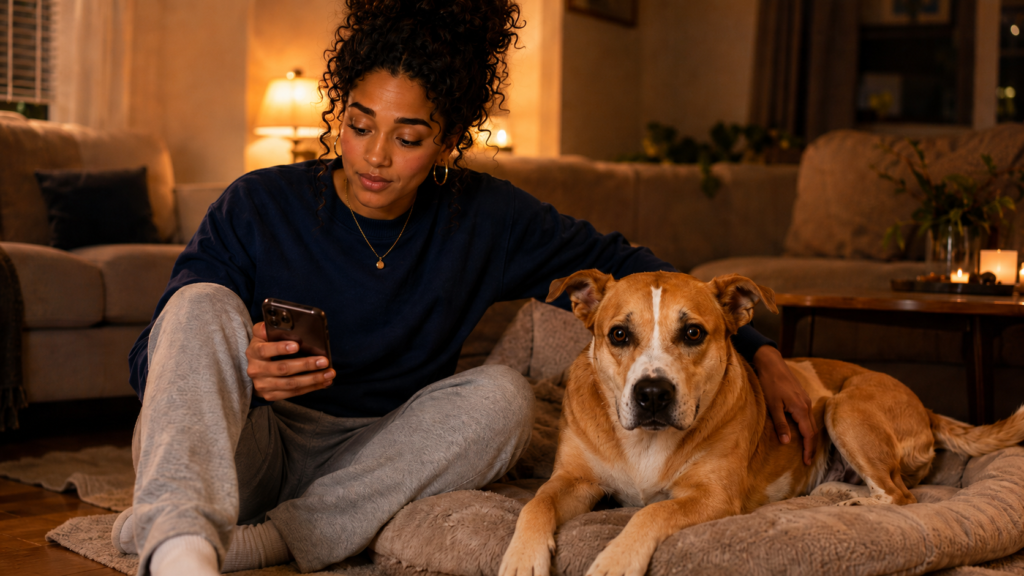
It always feels worse at night.
Your dog will not settle.
Your cat is hiding under the bed.
Your pet skips dinner for the first time in months.
Or something just feels… off.
Not dramatic. Not obvious. Just different.
And suddenly you are wide awake, staring at your pet, trying to decide if you are overreacting or missing something important.
This is one of the hardest parts of pet parenting, your pet cannot tell you what hurts, what changed, or when it started.
So your brain tries to fill in the blanks.
Was she limping yesterday?
Did he eat breakfast?
Was that weird cough new?
Did I already give the medication tonight?
Could this be from the new treat?
That is when most pet parents fall into the same trap: the 2AM Google spiral.
You search one symptom.
Then another.
Then another.
Ten minutes later, you are reading worst-case scenarios that may have nothing to do with your pet’s age, breed, allergies, medications, or health history.
So let’s slow the moment down.
Here is what to do when your pet starts acting weird at night.
First, Check for Obvious Emergency Signs
Some situations should not wait.
If your pet is having trouble breathing, collapses, has a seizure, cannot stand, is choking, seems poisoned, has a swollen belly, is bleeding heavily, or appears to be in severe pain, call an emergency vet right away.
If you think your pet may have eaten something toxic, call your emergency vet or a poison control hotline immediately.
ASPCA Animal Poison Control: 888-426-4435
This is not the time to “wait and see.” It is the time to get professional help.
But not every strange behavior is obvious.
Sometimes your pet is just acting differently enough to make your stomach drop.
That is where the next step matters.
Write Down What You Are Seeing Before You Forget
When your pet acts weird at night, your memory feels sharp in the moment.
But stress makes details slippery.
By morning, “she seemed off” can turn into:
“I think she was pacing.”
“Maybe she skipped dinner?”
“I can’t remember if the shaking started before or after she went outside.”
That does not mean you are careless. It means you are human.
Mental notes do not hold up well under stress.
So before you start guessing, write down what you can see.
Track the Basic Details
Start with simple notes:
What time did it start?
What changed?
Did your pet eat?
Did they drink water?
Did they vomit?
Did they go outside?
Are they walking normally?
Are they hiding, pacing, whining, coughing, shaking, or breathing differently?
You do not need a perfect medical report.
You just need a clear timeline.
Because if you call the vet, one of the first questions will usually be:
“When did this start?”
And that question is much harder to answer when you are scared, tired, and trying to remember everything at once.
Do Not Rely on Google Alone
Google can be useful, but it does not know your pet.
It does not know your dog has a chicken allergy.
It does not know your cat is on medication.
It does not know your senior dog has been drinking more water this month.
It does not know your puppy ate a new treat before bedtime.
Generic advice can make you panic because it gives you every possibility at once.
That is why the better question is not:
“What does this symptom mean for pets?”
It is:
“What does this change mean for my pet, with their actual history?”
That is the gap most pet parents feel at night.
You do not just want information.
You want context.
Look for Patterns, Not Just One Moment
One strange night may not tell the whole story.
The bigger question is whether this behavior connects to other small changes.
Maybe your dog hesitated before jumping onto the couch last week.
Maybe your cat has been sleeping in a different room.
Maybe your senior pet is eating slower.
Maybe the water bowl has been empty more often.
Maybe your dog has been “just tired” after walks.
Small changes are easy to explain away when they happen one at a time.
“He is just getting older.”
“She is probably tired.”
“He has always been picky.”
“It was probably the heat.”
Sometimes that is true.
But sometimes those tiny moments are the beginning of a pattern.
And patterns are hard to see when they live in your memory, your camera roll, your text messages, and a sticky note on the fridge.
Keep Your Pet’s Key Health Info in One Place
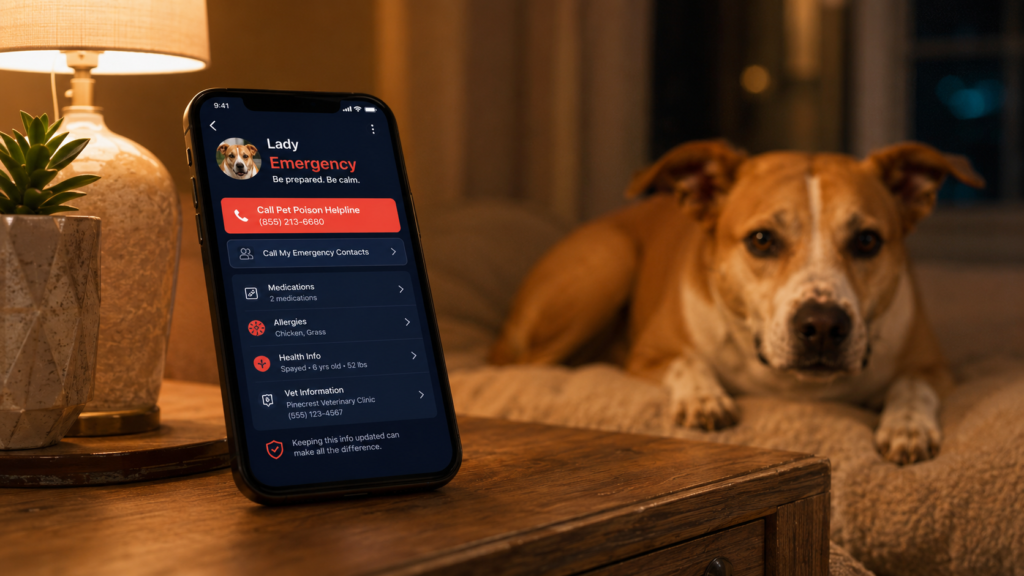
At night, you should not have to search five places for basic information.
Your pet’s medications should not be buried in a text.
Vaccine dates should not live in an old email.
Allergy notes should not be something you “think” you remember.
Emergency numbers should not require a fresh Google search while you are panicking.
This is where preparation becomes peace of mind.
Lady helps pet parents keep their pet’s health details in one place, including:
Medications
So you can check what your pet takes, when it was last given, and what is currently active.
Allergies
So you are not relying on memory when food, treats, or possible toxins are involved.
Vaccines
So your pet’s status is easier to find when the vet asks.
Health Notes
So small symptoms and behavior changes do not disappear by morning.
Emergency Details
So important numbers and health info are close when you need them.
Lady is not a replacement for your vet.
It is a way to stay organized, prepared, and supported when your pet cannot explain what is wrong.
What to Say If You Call the Vet
If you decide to call your vet or an emergency clinic, keep it simple and specific.
You can say:
“My pet started acting differently around 10:30 tonight.”
Then share:
What changed
How long it has been happening
Whether your pet ate or drank
Any vomiting, diarrhea, coughing, shaking, limping, hiding, or breathing changes
Any known allergies
Current medications
Any possible toxins, new foods, treats, or supplements
Any recent vet visits or health issues
The goal is not to diagnose your pet.
The goal is to give the vet a clearer picture.
Because when your pet is counting on you to speak for them, details matter.
Set Up Your Emergency Info While Things Are Calm
The best time to organize your pet’s emergency details is not during an emergency.
It is tonight, when things are quiet.
Add your pet’s meds.
Add their allergies.
Add vaccine dates.
Add your vet and emergency contacts.
Add the details you always think you will remember but somehow never can under pressure.
You hope you never need it.
But if your pet starts acting weird at night, you will be glad it is there.
Lady’s Emergency Screen is always free and never paywalled, because emergencies should not wait for a subscription.
Final Thought: You Are Not Overreacting for Paying Attention
Pet parents know their animals.
You know the normal walk.
The normal appetite.
The normal energy.
The normal bedtime routine.
The normal look in their eyes.
So when something feels off, it makes sense that you notice.
That does not mean you need to panic.
It means you need a calm next step.
Check for emergency signs.
Write down what you see.
Call a vet when needed.
Keep your pet’s key details in one place.
Because your pet is not generic.
Their care should not be either.
Learn More: Lady Knows MY Pet
Team Lady 🐾
Frequently Asked Questions
What should I do if my dog is acting weird at night?
Start by checking for emergency signs like trouble breathing, collapse, seizures, choking, suspected poisoning, severe pain, or heavy bleeding. If any are present, call an emergency vet right away. If the behavior is subtle, write down what changed, when it started, and any symptoms you notice.
Should I Google my pet’s symptoms at night?
Google can give general information, but it does not know your pet’s age, allergies, medications, or health history. Use it carefully, and call your vet or emergency clinic if you are unsure or concerned.
Is Lady a replacement for a vet?
No. Lady helps you stay organized and prepared, but it does not replace professional veterinary care. If your pet may be having an emergency, contact a vet immediately.
Are signed copies available?
This exquisite compilation showcases a diverse array of photographs that capture the essence of different eras and cultures, reflecting the unique styles and perspectives of each artist.